
Yuletide celebrations were set in motion early this December for our Alumni Club and we were delighted to enter the festive season by tasting the wines of historic and pioneering Chilean producer De Martino Wines. The evening was hosted by fourth generation descendant Sebastián De Martino, as well as Guy Cooper, whose aim was to carry us through the various classic Chilean wine regions and demystify the factors surrounding the grape growing and wine production of their expertly made wines.
De Martino History
De Martino wines is a Chilean family winery based in the small town of Isla de Maipo. The Domaine was founded in 1934 by Pietro De Martino Pascualone, an Italian immigrant from Abruzzo, Italy, who brought his family’s winemaking tradition to Chile. Nowadays, with more than 80 years of history, the winery combines the experience of the third generation of the family, represented by Pietro, Marco and Remo De Martino, with the dynamism and vision of the fourth generation, made up of Marco Antonio and Sebastián De Martino who, together with oenologist Nicolás Pérez, lead the projects of the cellar and continue with their constant search for exciting terroirs while polishing their house style.
Wine Philosophy
De Martino is known for its commitment to sustainable and organic winemaking practices. They believe in working in harmony with nature and respecting the environment and have implemented various initiatives such as the use of organic fertilizers, cover crops, and natural pest control methods. By adopting organic techniques and minimizing intervention, they aim to create well-balanced, single vineyard wines that authentically express the unique character of Chile’s different terroirs. The family owns their own land as well as working with growers of vineyards located in various key regions of Chile. They are primarily focused in Maipo and Itata but also make wines from Maule, Cachapoal, Malleco, Limarí and Casablanca. Each vineyard is carefully selected and managed to cultivate grapes that showcase the distinct characteristics of the specific region.
The vineyard diversity offers a wide range of wines, including reds, whites, and sparkling wines. Their portfolio includes varietals such as Carmenere, Cabernet Sauvignon, Malbec, Carignan, Cinsault, Syrah, Pinot Noir, Pais, Chardonnay, Semillón, Sauvignon Blanc, Muscat, Corinto, among others. They also produce several top-tier wines from their Single Vineyard series, which highlight the best expressions of their vineyard sites.
The Wines
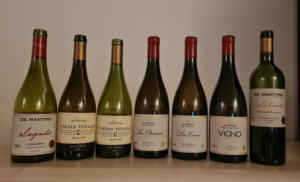
1. De Martino 2022 Chardonnay ‘Legardo’, Limarí, 13% ABV The Great Wine Co £17.75
The vineyards in the Limarí subregion, known for producing Chile’s finest Chardonnays, benefit from their location in the northern part of Chile. Situated between desert conditions and cool ocean breezes, the region experiences a dry climate with low rainfall. However, the proximity to the cool ocean allows for refreshing coastal breezes that moderate the microclimate and slow down the ripening process, preserving fresh aromatics on the grapes. The limestone and clay soils, characteristic of the area, help retain water in this dry and arid climate.
This Chardonnay was destemmed and pressed gently; the fermentation took place with natural yeasts in 228L used oak barrels. The wine underwent partial malolactic fermentation and was then aged for 8 months in neutral oak barrels.
Ripe citrus, apricot and peach tones, with buttery and sweet dough notes on the nose. On the palate it is dry, with medium+ acidity and medium body with intense citrus fruit and a creamy texture leading to a lingering saline finish.
2. De Martino 2020 Muscat ‘Viejas Tinajas’, Itata, 12.5% ABV The Great Wine Co £29.50
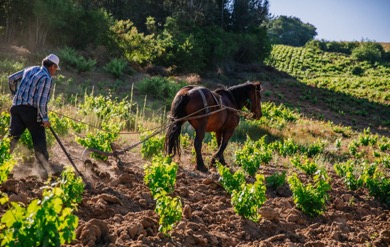
Located 450 kilometres south of Santiago, Itata is one of the oldest wine regions in Chile. It experiences a cool coastal Mediterranean climate with more rainfall during winter and spring, followed by dry summers. In the vineyards the Muscat is grown in consist of 40-year-old ungrafted bush vines that are dry-farmed and traditionally trodden by horses. The mineral rich granitic soils warm quickly and retain heat during the day while a faster cooling down at night preserves freshness and acidity in the grapes.
 The handpicked Muscat grapes were destemmed with whole berries placed inside the tinajas (amphorae). Fermentation took place with ambient yeasts with a skin contact period of 10 months, a process that would classify this as an orange wine. The wine was then racked to a different amphora for further maturation. No fining or filtering.
Orange colour, unfiltered (hence slight natural haziness). Intense aromatics of sweet ripe tropical fruit, candied orange, orange peel, lychee, rose petals and a variety of blossom accompanied by hints of honey. Dry on the palate with medium+ acidity, medium tannins, medium body and aromas of fresh grape, green tea leaves and fresh citrus notes. Wonderfully complex and refreshing with a chewy texture and a long finish.
3. De Martino 2018 Cinsault ‘Viejas Tinajas’, Itata, 12.5% ABV The Great Wine Co £29.50
The Cinsault ungrafted vines were planted in 1976 on gentle granitic soil slopes. Dry farmed and traditionally horse trodden.
The grapes are handpicked in March, destemmed and the whole berries undergo spontaneous semi-carbonic fermentation in tinajas. The free run and press wine overwinter in amphorae and the wine is bottled in spring, after the malolactic conversion is complete.
Medium garnet, stewed blueberries and cherries, stewed plum, dried blossom petals, cinnamon spice. On the palate it is dry, with medium acidity, medium fine-grained tannins, a meaty texture with medium+ finish.
4. De Martino 2019 ‘Las Olvidadas’, Itata, Field blend 80% Pais and 20% San Fransisco, 13%ABV The Great Wine Co £38.50
These old vines are thought to have been planted between 100 and 300 years ago in an area of mountains and gentle slopes, with many old vineyards with granitic soils.

Handpicked grapes are put through a “zaranda” (bamboo sticks bound together where the grapes lay on and are pressed crushed and destemmed by hand).
This is to bring back to life the old winemaking traditions. The juice falls naturally into the fermenting open bin and starts fermenting with native yeasts. The wine then spends time maturing in neutral oak barrels. No sulphites are used in any part of the winemaking or bottling process. The resulting wine is a pure expression of the grapes and vineyard.
Lovely ripe strawberry and red plum fruit, fresh green unroasted coffee beans cinnamon and liquorice spice. Dry with medium acidity, medium+ chewy tannins, medium body and a medium+ finish.
5. De Martino 2019 Carignan VIGNO, Maule, 14% ABV The Great Wine Co £38.50
Although Maule may be regarded as the centre of bulk wine production, plantings of old vine dry-farmed Carignan are producing some wonderful and deeply concentrated examples.
This vineyard was planted in 1955 and practices dry farming, with vines planted on their original rootstock and trained in the bush style. The soil is deep, containing reddish clay and granite that retain moisture during the ripening period, making it suitable for dry farming.

The destemmed grapes are placed whole in the fermentation vessel and cold macerated for 7 days. Fermentation begins spontaneously. The wine is then further matured for 24 months in 5000L oak foudres.
Intense aromas of redcurrant, red cherry, blackberry hints of blossom and liquorice, earth and cinnamon spice. Dry on the palate with high acidity, medium+ smooth tannins, full bodied, medium+ intensity with very fresh berry flavours in the mid-palate that lead to a long, delicious finish. The wine is still developing and can age further in the bottle.
6. De Martino 2018 Malbec/Carmenere ‘Las Cruses’, Cachapoal, 13.5% ABV The Great Wine Co £38.50
This particular vineyard is a combination of roughly 75% Malbec and 25% Carmenere grapes. It is dry farmed, meaning it relies solely on natural rainfall for irrigation. The vines are planted using their original rootstock and are pruned using the Double Guyot technique, which involves training the vines to have two fruiting canes. The soils are granitic with a small amount of clay that maintains enough water retention to allow for dry farming.
The destemmed grapes are carefully placed in the fermentation vessel and undergo a cold maceration process for a duration of 7 days. Following this, fermentation commences naturally. The wine is subsequently aged for an additional 24 months in oak foudres with a capacity of 5000L.
Fresh but perfectly ripe berry flavours, purity of fruit, red cherry, blackberry and currants intermingle with spicy, earthy, forest floor undertones. On the palate this is dry with medium + acidity, medium+ ripe tannins, full body and a very satisfying, long finish packed with intense fruit. Balanced, with pronounced intensity of fruit, lovely freshness and a very moreish wine. Great to enjoy now with the option for further developing.
7. De Martino 2020 Cabernet Sauvignon ‘La Cancha’ Maipo, 13.5% ABV The Great Wine Co £32.00
La cancha means “the pitch”, a tribute to the football pitch that used to be the family’s gathering to play the sport. This single vineyard in the home region of Maipo is the main terroir of the De Martino winery. Its gravely soils are favourable for the cultivation of Carmenere and Cabernet Sauvignon.
The grapes were completely destemmed and underwent a cold soak for 5 days before starting spontaneous fermentation in stainless steel tanks. The malolactic fermentation took place in tanks as well, and the wine remained in contact with the skins for a total of 17 days before being transferred to 5,000L foudres. After that, it was aged in 2,500L wooden foudres for 24 months.
Cherry cola, liquorice, blackberry and black cherry, cassis, black plum, blossom, meaty. Dry, high acidity, high smooth tannins, full, medium+ flavour intensity, with good texture on the palate and a long finish. A developing wine that can stretch and reveal further tertiary notes in the next few years.
Over the years, De Martino has received numerous accolades and critical acclaim for their wines. They have been recognized as one of Chile’s leading wineries and have achieved international recognition for their craftsmanship and commitment to quality and innovation. The winery was the first to label and export Carmenere from Chile in 1996 and was a pioneer in working on, and reviving, ancient winemaking techniques in the centenarian vineyards of the Itata Valley that set a precedent in Chilean wine industry.
If you have a minimum of WSET Level 2 wine qualification, you are welcome to join the Enjoy Discovering Wine Alumni Club, which meets online around six times annually. For more details: Alumni Club
 Not sure what level of wine knowledge you already have?