
Alumni Club presents Wines of Ukraine
Ukraine is one of Europe’s oldest yet least explored wine-producing countries, with a winemaking history shaped by ancient civilisations, shifting borders and, more recently, remarkable resilience. In recent years, a new generation of producers has begun to reintroduce Ukrainian wines to an international audience, combining historic terroirs with modern winemaking techniques.
Our tasting on 18 November focused on two contemporary estates at the forefront of this revival — Beykush and Kolonist. Through their wines, we explored how the Black Sea climate, diverse grape varieties and a spirit of innovation are redefining Ukraine’s place on today’s wine map.
History of winemaking in Ukraine
Winemaking in Ukraine dates back over 2,500 years, with the earliest evidence of Vitis vinifera cultivation found in Crimea in the 8th century BC. By the 7th century BC, Greek colonists had established vineyards across the Black Sea coast, embedding wine into trade, culture and ritual. Viticulture gradually spread inland, as confirmed by grape-growing tools discovered in Zakarpattia from the 3rd century BC. During the medieval period, winemaking flourished in the monasteries of Kyivan Rus, where wine played a central role in both religious and everyday life.
From the 17th century onwards, vineyards expanded eastwards, culminating in a golden age in the late 19th century, when Ukraine gained international recognition—most notably in 1900, when the Prince Trubetskoi Winery won the Grand Prix at the Paris Exposition. Despite severe disruption during the Soviet anti-alcohol campaign of 1985–1987, which destroyed nearly a third of Ukraine’s vineyards, the modern Ukrainian wine scene is defined by resilience and renewal. Our tasting on 18 November focused on two of these contemporary producers—Beykush and Kolonist—whose wines exemplify how Ukraine’s historic terroirs are being reinterpreted through a modern, quality-driven lens.
Beykush Winery
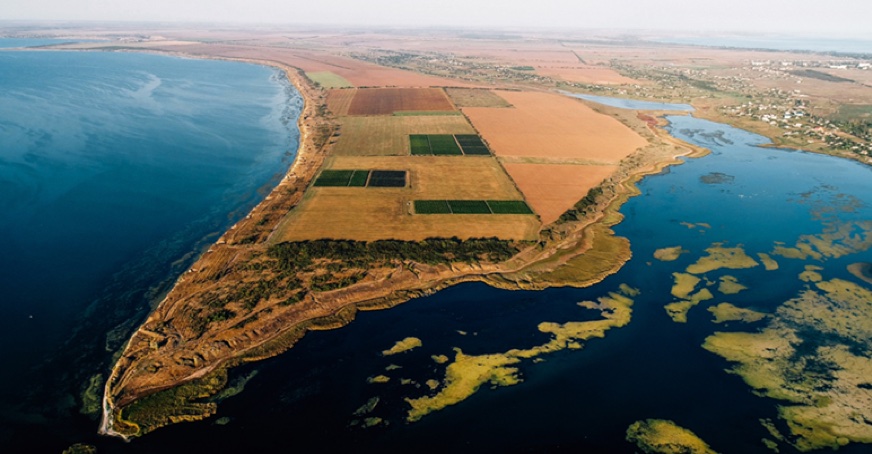
 Beykush Winery is a family-owned estate established in 2010, located on the Black Sea coast in the village of Chornomorka, Mykolaiv region. Surrounded by sea and steppe, the estate benefits from a moderately continental climate with strong maritime influence, offering warm summers, mild winters and a long, sunny growing season. Annual rainfall is low, and the cooling effect of the Black Sea helps moderate temperature extremes, allowing grapes to ripen slowly while retaining freshness and aromatic precision.
The estate farms 14 hectares of vineyards, planted with an unusually broad mix of 17 grape varieties, including international grapes such as Chardonnay, Pinot Noir and Cabernet Sauvignon alongside Georgian and indigenous varieties like Telti Kuruk, Rkatsiteli and Saperavi. Beykush works exclusively with its own fruit, harvesting by hand and vinifying using a combination of stainless steel, oak, concrete and clay amphorae. The wines are grouped into several ranges, from varietal-driven bottlings under the Beykush name to experimental blends, amphora wines and historically inspired cuvées that reflect the layered cultural heritage of the region.
Kolonist Winery
Kolonist Winery was founded in 2005 by the Plachkov family and is located in the Danubian Bessarabia region of southern Odesa, close to Lake Yalpug. This historic wine-growing area, influenced by both the Danube and the Black Sea, benefits from warm summers, cooling breezes and a long growing season, creating favourable conditions for balanced ripening and aromatic expression.
Kolonist focuses on low-yield vineyard management and a quality-driven approach, producing a range of dry, semi-dry and sweet wines. The winery combines modern cellar technology with traditional practices, including ageing in French oak barrels. Alongside international varieties, Kolonist champions regional and Ukrainian grapes such as Odesa Black and Sukholymanskyi, helping preserve local wine heritage while positioning the region within a modern, premium context.
The Wines
- Kolonist Winery, Riesling Semi-Dry 2024, 11.5%, £25
Pale lemon, Pronounced aroma intensity, ripe lemon, lime, lychee, ripe pear, jasmine blossom, ripe peach, passion fruit. Pronounced flavour intensity, Medium sweet, high acidity, medium- alcohol, light body, long finish. Wonderful aromas and flavours across from floral to green to tropical to stone fruit, complex with the sweetness balanced very well by the Riesling’s natural acidity.
- Beykush Winery, Telti-Kuruk 2024, 13.5% £27
From Telti kuruk variety means the fox’s tail. Pick mid-September. 12-hour skin contact. 100% Telti Kuruk is aged on fine lees for five months, with periodic stirring to enhance texture and depth. Pale lemon, Pétillance, light aromatic intensity with grapefruit, grass, asparagus. Dry with medium+ flavour intensity, lemon, lime, unripe kiwi, apricot and nectarine, some phenolic bitterness, medium- acidity, medium+ layered herbaceous finish. Last 6 bottles in the world we got to try! 2300 bottles only released.
- Beykush Winery, Rkatsiteli Amphora Orange 2023, 13.5% £26.50
Originally from Georgia but well fitted in Ukrainian wine making tradition for the past 100 years. 8-10 days fermentation on skins. Pronounced aromatic intensity, medium gold colour, honey, orange blossom, orange peel, tropical notes such as ripe pineapple, stewed apple, ripe pear, almond. Dry palate with pronounced flavour intensity, medium+ acidity, low tannin, medium alcohol, medium+ body, long finish. Complex and gastronomic.
- Kolonist Winery, Odesa Black 2023, 13.5% £22.
Cross of Alicante Bouchet and Cabernet Sauvignon makes this Odesa black or Alibernet (Alicante + cabernet!). Medium intensity, blackcurrant, black cherry, red cherry, cranberry, liquorice, tobacco, cinnamon spice and smoke. Medium+ flavour intensity, Dry, high acidity, medium soft tannins, medium alcohol, medium+ finish.
- Kolonist Winery, Cabernet Merlot (+ less than 10% cab franc) Top Gamma 2020, 13.4%, £30.
Medium+ intensity aromas blackcurrant, black cherry, liquorice, plum, vanilla, prune. hPronounced flavour intensity, black plum, vanilla, prune, cedar, smoke. Dry, high acidity, high chalky tannins, medium alcohol, medium+ body, medium+ finish. Developing.
- Beykush Winery, Kara Kermen Tempranillo Saperavi 2021, 13.5% £60.
Grapes are dried for one week. Medium + intensity, cooked fruit, red cherry red plum, sweet nose, but also raisins, prunes. Dry on the palate with high acidity, medium+ sticky tannins, high alcohol, medium+ body, perfumed, medium+ finish.
Tasting these wines also invites a moment of reflection. Ukraine’s contemporary wine revival is unfolding against the backdrop of ongoing conflict, making the commitment of producers such as Beykush and Kolonist all the more remarkable. Despite immense challenges, vineyards continue to be tended, wines continue to be made, and centuries-old traditions continue to evolve. In this context, each bottle becomes not only an expression of terroir, but also a quiet testament to resilience, continuity and hope.
The wines in the tasting are available to buy on the Ukrainian Wine Company Website.
If you have a minimum of WSET Level 2 wine qualification, you are welcome to join the Enjoy Discovering Wine Alumni Club, which meets online around six times annually. For more details: Alumni Club.
 Not sure what level of wine knowledge you already have?