
The 2022 Alumni events began in January with the first of our VDP tastings – Dia Grigoriou details below in her blog all about the event and the fabulous wines we all had the opportunity to taste.
The VDP Series Weingut Karl Haidle & Maximin Grünhaus
When Erica announced a series focusing on distinguished VDP producers, our Alumni wine club members unanimously said “yes please!”. Our thirst for fine German wine put Dry January on pause.
Our evening began with VDP Managing Director Theresa Olkus introducing us to the ethos and aim of the association, followed by an in-depth discussion with two VDP wine grower members, Moritz Haidle from Weingut Karl Haidle and Maximin Von Schubert from Maximin Grünhaus. We had the chance to taste two eye opening reds made from Lemberger grapes and four superb white wines made from Riesling grapes.
The VDP (VERBAND DEUTSCHER PRADIKATSWEINGUTER)
Founded in 1910, the VDP is the world’s oldest association of premium winegrowing estates. Its energetic outlook makes it home to both ambitious newcomers and historic producers of global repute.
The aim of VDP is to:
- Preserve the German wine culture
- Promote high quality standards
- Demand environmentally friendly cultivation methods
The association has around 200 wine estates under its wing with the objective to produce terroir driven wines, influenced by their origin, site, soil, landscape and local climatic conditions.
Theresa explained that the Estates’ membership is not infinite and the members must adhere to strict rules and formalities set by the VDP. To maintain its commitment to high quality and standards, the association revises their members’ operations every five years.
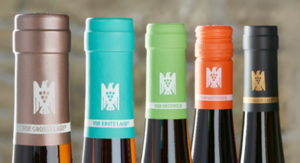
Wines made under the VDP umbrella can be identified by the VDP.Eagle logo on the capsule that serves as a guarantor for the highest wine quality and as a recognizable symbol of the VDP membership.
More importantly, the VDP established its own classification pyramid to highlight the provenance of its wines and therefore convey a hierarchy of quality. This results in a better understanding of its structure, its producers, their wines and their pricing.
Look for the VDP.Eagle logo on the capsule.
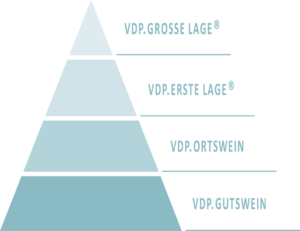 VDP.GROSSELAGE à Vines in the best plots in the best vineyards. Comparable with “Grand Cru” in Burgundy. When vinified dry, these are the GG (Grosses Gewächs). Outstanding quality wines with long ageing potential and a price tag around £35 and above.
VDP.ERSTE LAGE à Classified vineyards with particular terroir and microclimate. Comparable with “Premier Cru” in Burgundy. Low yields, hand harvest. Excellent quality wines with ageing potential and a price tag around £20+.
VDP.ORTSWEIN à Wines from grape varieties typical to the region. Comparable with “Village” in Burgundy with a price tag around £13-£14.
VDP.GUTSWEIN à Regional wines, similar to regional Burgundy. Younger, estate-owned vineyards. They are light, fresh and fruity, mainly drunk young with a price tag around £10 a bottle.
THE WINE ESTATES
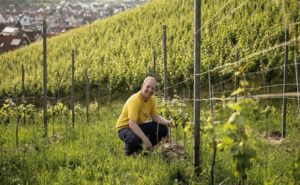 One of the oldest winegrowing estates in the lovely Rems Valley near Stuttgart, Weingut Karl Haidle is a three generation family business. It was established by Karl Haidle in 1949, then run by his son Hans and in recent years operated by Moritz, one of our guests, who initiated the transition of the estate to organic farming in 2014 and biodynamic since 2020. The Estate produces mainly Riesling, alongside many other varieties suited to the region such as Chardonnay, Spätburgunder (Pinot Noir) and Lemberger (Blaufränkisch). In recent years their red wines made from Lemberger have gathered attention and have repeatedly earned Vinum’s prestigious German Red Wine Prize.
Located on steep, south-facing slopes two kilometres from where the river Ruwer meets the Mosel, the estate of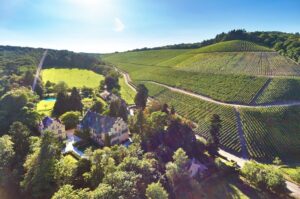 Maximin Grünhaus has a history of viticulture that dates back to Roman times. It takes its name from the Abbey of Saint Maximin, a Benedictine monastery which owned the land from the 7th to the 18th century. Passing into French administration under Napoleon and then eventually to the von Schubert family in the late 19th century, the estate is now overseen by sixth-generation family member Maximin Von Schubert, our guest, who took over from his father Carl Von Schubert in 2014. A Riesling specialist, the property is divided into three separate, but contiguous vineyards, each with their distinct microclimate, gradients and soils.
THE WINES
The first two wines were fantastic examples made from Lemberger, the German name for the black grape Blaufränkisch. It was exciting to be given the chance to explore this variety and its potential further.

Wine one, 2019 Stettener Häder Lemberger, VDP Erste Lage by Karl Haidle was a fresh entry to our tasting. The grapes are hand-picked and are semi whole bunch macerated which accentuates the sour cherry and bramble fruit aromas. Still developing, this wine displayed blackberry, blossom and peppery notes. It is dry, with high acidity due to the Northern cool aspect of the Häder vineyard and its fresh and juicy qualities make it food friendly, easily accompanying a variety of red meat or mushroom based foods. For Moritz, this is the ultimate party wine to drink all night long as its fresh fruit and elegance makes you keep coming back for more!
Wine no. two, the 2019 Stettener Berge, Lemberger, Großes Gewächs VDP Grosse Lage by Karl Haidle, comes from a South facing steeper vineyard with adjacent forest that shelters the vines from wind and adverse weather systems. Moritz explained that these conditions, alongside the pebble stone soil composition account for warmer temperature in the vineyard and extra warmth reflected onto the vines. In the winery the grapes are cold soaked and macerated with spontaneous fermentation and regular pump overs for maximum colour extraction, then aged in fine lees for 2 years in barriques that are partly new oak. All these elements create a wine with beautiful concentrated aromas and flavours of blackberry, black cherry, dried rose petals, pepper, spices, tobacco and earthy notes. Dry, with high acidity and high tannin which is masterfully disguised by the fruit concentration, full bodied with a long finish. This opulent red pairs well with game and roasts; we tried it with roast beetroot on a bed of yoghurt with green herb sauce and it was divine. An incredibly complex wine that puts Lemberger on the map.
On to our Rieslings. Premium wines from Germany are very much impacted by vintage variation so it was great to compare the more austere, cool 2020 against the warm and opulent wines made in 2018.
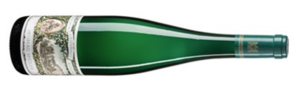
Our third and fourth wines were both dry versions, while wines five and six belong to the German Prädikats classification, meaning these wines are further distinguished according to their must weight at picking (higher levels of ripeness) and fruity style.
In terms of wine-making, Maximin explained that all wines the Estate makes are treated similarly in the winery. Low yield grapes are handpicked with an extra level of sorting and care which adds to the final quality of the wine. The grapes ferment spontaneously with native yeasts which adds to the identification of the place a wine comes from. In the cellar, the traditional German Fuder (1.000-liter wooden casks) are widely used.
Wine three- 2020 GRÜNHAUSER Riesling Trocken (Dry) VDP.Ortswein by Maximin Grünhaus is made from old vines from the VDP.Grosse Lagen vineyards Herrenberg and Abtsberg. Aromas and flavours of fresh apple, pear, lemon, lime and peach make this a zesty and elegant wine. On the palate the grippy acidity is optimally balanced by the subtle residual sugar and the wine finishes with a subtle saltiness that adds an extra layer of minerality. Maximin considers this a classic wine displaying a sense of place and the trademark taste of the Maximin Grünhaus’ wine style. Excellent in its youth but can also become more complex over time.
Wine four- 2018 Abtsberg Riesling Grosses Gewächs (Dry), VDP.Grosse Lage, by Maximin Grünhaus was an extraordinary wine of exceptional complexity that showed clear identification of the vineyard it comes from as well as the effect a warm vintage has on the aromas and flavours of the wine. With a pronounced nose of ripe pear, apple sauce, lemon, apricot, mango, melon and pineapple, with chamomile and subtle hints of petrol and honey this was an absolute treat to try! Its high acidity was beautifully balanced by the residual sugar and intensity of fruit, and its everlasting finish made us want more. We can see this pairing very well with the producer’s recommendations of scallops with mango chutney and coriander or langoustine tartare with passion fruit and avocado. Many of our members voted this as the wine of the evening.
On to the Riesling Prädikats, wine five- 2020 Herrenberg Riesling Kabinett VDP.Grosse Lage by Maximin Grünhaus comes from a high-quality vineyard in Germany which means it is distinguished by an expressive character. Our notes show ripe peach and apricot with hints of passion fruit, mango and petrol, white blossom and spicy herbs. On the palate it is medium dry with an ideal balance between residual sugar and its high acidity. A light and fresh wine perfect to enjoy in its youth, but can also age and develop further with bottle ageing. In terms of food and wine pairing such wines go well with almost anything, we enjoyed ours with butternut squash soup with a touch of chilli and crème fraiche and it was a match made in heaven. It important to note that sweeter style Rieslings come with a lower alcohol level which makes them ideal to enjoy with lunch and generally during daytime.
Wine six- 2018 Abtsberg Riesling Spätlese, VDP.Grosse Lage by Maximin Grünhaus was a fantastic late harvest wine with a seductive nose of ripe pear yellow apple, pineapple, creamy with lemon curd notes, white blossom and honey and subtle petrol notes. Medium sweet on the palate with a high acidity that was barely noticeable as it was perfectly balanced against the sweetness and intensity of fruit. A great wine to pair with a variety of food, Maximin mentioned he very much enjoyed this with caramelised beef steak while we thought it was marvellous with pork steak with caramelised onions and apple sauce where the sweetness of the wine matched the sweet apple whilst the acidity cut through the pork fat.
What a beautiful evening with amazingly complex wines. It would be fantastic to get the Karl Haidle Lemberger in the UK (please someone import these beauties!) while most of the Maximin Grünhaus wines you can directly buy from the importers “Liberty Wines” or Justerinis or Cambridge Wine at unbeatable prices for the quality on display. If you love quality wine from Germany and are on the look-out for older vintages, please check out the VDP page for any upcoming auctions, where, apart from current vintages, there are some truly rare fine wines you can bid and get your hands on.
If you have a minimum of WSET Level 2 wine qualification, you are welcome to join the Enjoy Discovering Wine Alumni Club, which meets online 10 times annually. For more details: Alumni Club.
 Not sure what level of wine knowledge you already have?