
VDP Alumni Club tasting March 2022
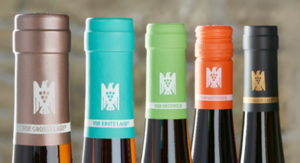
As an Ambassador for the VDP.Die Prädikatsweingüter, Erica hosted our second VDP tasting event, part of a series focused on quality wines from Germany. The Verband Deutscher Prädikats- und Qualitätsweingüter e. V. (VDP) is an association of around 200 German wine producers, whose members produce their wines according to stricter requirements than the German Wine Act stipulates. The members undertake to allow regular inspections to ensure full compliance (source: www.germanwines.de).
Three guests provided our Alumni Club members a thorough presentation of their distinctive wines. Jasmin Bähr, deputy sales manager at Kloster Eberbach in Rheingau, Andreas Hütwohl, general manager at Weingut von Winning in Pfalz, and Christian Dautel winemaker at Weingut Dautel in Württemberg. Between them explained the VDP concept on quality and their wine-making practices focusing on Riesling, Pinot Noir (Spätburgunder), Sauvignon Blanc and Chardonnay.
We have extensively covered the VDP connection with its valued members and its philosophy on our previous blog, which you can read here.
The Wine Estates
Kloster Eberbach
Situated in the renown Rheingau region Kloster Eberbach forms part of a former Cistercian monastery and has been making wine since 1136. The Burgundian roots of the Cistercian Monks brought the wine know-how and vines into Germany with major innovations such as wine presses, giant barrels, pumping wine throughout the monastery and irrigation system utilizing water from nearby streams. The current structure dates from around this time through to the late 16th Century. It is the largest German winery with 238 hectares of vine and its main cultivars are Riesling, Pinot Noir, Pinot Blanc and Pinot Gris. The winery is a founding member of the VDP association.
Weingut Von Winning
The estate’s history goes back to 1718. The winery was established in 1849. In 1907, Leopold von Winning, son-in-law of Dr Andreas Deinhard, dedicated his life to creating top quality wines with respect to the outstanding vineyards in which he was allowed to work. As a founding member of the VDP he introduced his beliefs into the philosophy of this renowned association. Today, the young and ambitious team around Stephan Attmann deliberately uphold this visionary’s tradition. The von Winning vineyards are located in the Pfalz from Neustadt to Forst along the German Wine Route and are cultivated sustainably. The main grape varieties cultivated are Riesling, Sauvignon Blanc, Pinot Blanc, Chardonnay and Pinot Noir and each site is as unique, as is the wine that comes from it.
Weingut Dautel
Located in the heart of Württemberg wine region, Weingut Dautel have been making wine since 1510. The winery was part of the local cooperative until Ernst Dautel influenced by his travels in Italy and France, realised the enormous potential of his vineyards and envisioned the production of fine wines made from the Chardonnay grape. At the time nobody had imagined that this type of wine would shape the new Württemberg top wines. Ernst’s son, Christian, is continuing the passion for this grape and its potential in Germany through his studies at Geisenheim and Bordeaux universities and via several internships at flagship wine regions of the world where he gained valuable insight on biodynamic viticulture and the production of the finest of chardonnays. Alongside Chardonnay, Riesling, Pinot Noir, Lemberger and Pinot Blanc are also cultivated at Estate’s vineyards.
The Wines
The first wine of the night was the Weingut von Winning 2020 Sauvignon Blanc Imperiale, Trocken VDP.Gutswein, Pfalz, 12.5% ABV. In terms of the VDP quality classification the mention of “Gutswein” on the wine label denotes a regional wine, similar to regional Burgundy, from younger estate-owned vineyards that produce light, fresh and fruity wines. It may have been surprising to our guests seeing a Sauvignon Blanc on a German wine flight, however, as Andreas explained, the variety is traditionally used in this region due to its proximity to France but importantly because the Pfalz is the second warmest wine region in Germany. Here you got lemon sherbet, lime, gooseberry but also peach and passionfruit aromas reflecting the topography and regional climate where intense daytime sunlight offers riper fruit aromas whilst cool evening temperatures allow for freshness, citrus qualities and acidity. The work in the winery comes into play here, where fermentation and maturation in various sized oak barrels along with time spent on lees, result in creaminess on the palate with notes of toasted hazelnuts.
We felt this wine had it all. From zesty citrus to tropical passionfruit to creamy mouthfeel this was an all-rounder success reminiscing a Bordelaise nature Sauvignon Blanc with a hint of Cote D’Or quality derived from the time the wine spent in oak.
Our second wine, Kloster Eberbach, 2019 Crescentia Trocken Wiesbadener Neroberg Riesling VDP.Erste Lage Rheingau is equivalent to a 1er Cru and comes from the Estate owned Wiesbaden single vineyard with Riesling vines stretching up the slope to 227m. The site is surrounded by an old forest at the top that shelters the vineyard from wet weather in the winter protecting the site from disease pressure but also offers a cooling effect by regulating the temperature during the warmer summer months. The south-facing slopes allow plenty of sunlight that is evenly distributed on the vines and the long ripening period contributes to the maximum phenolic maturation and structure to the final wine. The soils consist of volcanic gneiss rock rich in minerals, and loess, that allows the combination of easy workability and an optimal balance of drainage and water retention.
The result is a delicately perfumed dry wine with red apple notes, pear, ripe peach indicative of the warm vintage, hints of smoke and a distinct floral quality. On the palate it reveals more of a citrus character with lime and green apple, pear again and wet stones. It is supported by a high acidity that gives a fresh and lively character. A perfect dry Riesling that would match fresh salads and seafood dishes beautifully.
 Wine number three Weingut von Winning 2018 Ungeheuer Riesling Grosses Gewächs (Dry), VDP.GrosseLage Pfalz belongs to the VDP Grosse Lage quality classification and denotes vines in the best plots in the best vineyards. It is comparable with “Grand Cru” in Burgundy and, when vinified dry, these are the GG (Grosses Gewächs). The Ungeheuer vineyard is one of the most famous of the area due to its unique soil composition of free-draining red sandstone and the water-retaining limestone alongside the volcanic basalt. The vineyard is situated at the very top of a series almost terraced-like plots of vine land benefiting from direct sunlight and cooler temperature.
100% vinified in 500l oak barrels. Aromatic nose with ripe lemon, orange peel, ripe peach and apricot, flintstone, toasted hazelnuts and oak spice. An intensely flavoured palate with ripe citrus fruit and notes of toast is beautifully balanced by high acidity. Very complex aromas and flavours with a long salty finish. In terms of serving and enjoying, this is a wine that would benefit from decanting to release further aromatics. Can be paired with grilled fish and, why not, grilled steak as it is a concentrated wine with great structure that can stand against big flavours. We have the winner of the night here; this is an outstanding wine!
Wine four, Weingut Dautel, 2019 Chardonnay S Trocken Deutscher Qualitätswein Württemberg is produced from old vines, probably one of the oldest Chardonnay vines in Germany. The vineyard is planted in calcareous soil rich in calcium with water-retention properties and the vines are cultivated sustainably. Viticulture techniques such as green harvesting are used to lower yields and promote healthy high-quality grapes and harvesting is done by hand with extra care on picking healthy, ripe bunches. In the winery the grapes are gently pressed and fermentation begins spontaneously by the natural yeast present in the vineyard and the winery. The wine is fermented in 300l barrels with natural malolactic conversion. Following fermentation, the wine spends 12 months in small old barrels.
A wine with classic chardonnay flavours of ripe apricot and peach skin, alongside fresh pineapple, vanilla and toast. On the palate it is creamy with its acidity supporting the intense flavours in a balanced manner. Flavours of ripe citrus with peachy notes and toasted hazelnuts finish off in a long length. Try this complex and elegant chardonnay with trout and fennel fillet, an excellent pairing according to Weingut Dautel.
 Wine five, our first red wine of the night is a Spätburgunder, the Kloster Eberbach 2018 Pinot Noir Edition S Trocken VDP.Gutswein, Rheingau. This is actually a GG (dry) wine made from two Grosse Lage vineyard sites. As such the wine is ‘declassified’ with a slightly lighter, fresh and pure style. Although the vineyards are traditionally planted with Riesling, due to global warming, plantings of Pinot Noir have also emerged with the examples produced reaching great quality potential. The vineyards have a southerly orientation and are situated in dramatic steep slopes in the municipalities of Assmannshausen and Rüdesheim. With 80% gradient, cultivation is only possible by hand. Fermentation is carried out separately for each parcel in stainless steel and the wines are then blended together to harmonise. Maturation is carried out in 600l German oak barrels with ageing on the lees for three years.
The result is a bright pale ruby coloured wine packed with red fruits such as pomegranate, strawberry, raspberry and red cherry alongside cranberry, kirsch, redcurrant berries and strawberry yoghurt. On the palate it has enough acidity to balance the fruit, is supported by smooth tannins and finishes off on a fresh, savoury, mineral note. A well-made clean, fresh and fruity Spätburgunder that can harmoniously pair with Moroccan couscous, grilled fish, smoked meats and mushroom-based food dishes. The wine can develop and age gracefully further in the bottle.
Our final wine Weingut Dautel, 2018 Obersteinfelder Forstberg Spätburgunder Grosses Gewächs VDP.Grosse Lage, Württemberg, comes from Pinot Noir clones of the Côte de Nuits in Burgundy. Weingut Dautel works the vineyard sustainably with deep care, lowering yields to maintain grape quality and employing green harvest and bunch removal. The harvest is done manually with extra attention given on the timing. Christian explained that his vision of Pinot Noir is a fresh and fruity wine with fragrant nose and elegant structure hence his choice is to pick earlier to preserve the fruit and acidity profile, otherwise there is a risk of an overripe wine which is undesirable to the winemaker. In terms of winemaking, there is a focus in gentle grape processing, with rigorous selection of every single berry followed by long maceration and spontaneous fermentation in traditional wood barrels. The maturation is carried out in small oak barrels for 12 months plus aging in big barrel for another 10 months.
Very fragrant aromas of forest berries, ripe red cherry, fresh pomegranate and strawberry with hints of violet and spice. Great concentration and depth of flavour on the palate with the high acidity and smooth, well integrated tannins finishing off on a fresh fruit note with immense energy.
A superb evening, with exceptional wines that truly conveyed the VDP commitment to high quality standards. It was very interesting to discover German wine beyond Riesling. We felt the wines reflected the land they come from and the people behind them presented them with such passion! We are starting to think our Alumni Club Members have developed a taste for fine German wine and who wouldn’t? It is time for Germany’s wine gems to shine in the wider world!
If you have a minimum of WSET Level 2 wine qualification, you are welcome to join the Enjoy Discovering Wine Alumni Club, which meets online 10 times annually. For more details: Alumni Club.
 Not sure what level of wine knowledge you already have?