
Tempranillo with Familia Fernández Rivera
For our February Alumni Club meeting we were joined by Jose Saez, Export Director of Familia Fernández Rivera, home of the fabled Tinto Pesquera produced in Ribera del Duero. We enjoyed exploring together the different expressions of Tempranillo from Ribera del Duero, La Mancha and Castilla y Leon.
The Tempranillo Grape
 Tempranillo is Spain’s leading black grape variety and, in 2021, for the first time, has surpassed Airén to become the most planted grape in the country. It is grown in many regions in northern and central Spain and makes quality wines from classic regions such as Ribera del Duero, Rioja and Toro. A thick-skinned black variety, although slightly less thick compared to Cabernet Sauvignon, it is early ripening and therefore prefers a warm climate. Tempranillo’s naturally low acidity means higher altitude growing sites and cool air influences must be considered for quality wines. This is why it grows excellently in Ribera del Duero, known here as Tinto Fino, where the combination of intense sunlight, high elevation and wide diurnal range help retain its acidity while allowing its flavours to fully develop. Tempranillo produces medium to high yields and producers can adjust this to create wines of various quality levels. A winemaker can play with various techniques from carbonic maceration, to produce a fresh, early and easy drinking style, to more concentrated examples created using extensive maturation in oak barrels. The key flavours of Tempranillo are juicy strawberries and raspberries with stewed bramble fruit plus oak-derived spice, leather and vanilla.
Familia Fernandez Rivera
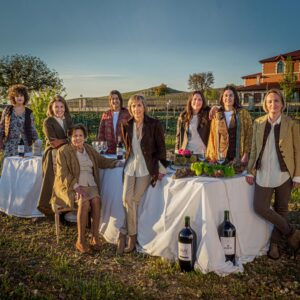 Familia Fernández Rivera was established by Alejandro Fernandez and Esperanza Rivera in the early 1970s in Ribera del Duero before the appellation had even been created. Only a few wineries existed in the region at the time and the Family is considered one of the pioneers that set the foundation of the recognisability of the now famous Ribera del Duero appellation. 2022 marks the 50th anniversary of the winery, one of the few in the area that are able to boast such a long tradition. In 2019 the granddaughters of Esperanza and Alejandro took over the reins and the third generation of Familia Fernandez Rivera is now at the helm of a company that adapts to the times and continues to expand. If there is something that clearly defines Familia Fernandez Rivera, it’s a love of the land from which its wines are made. This family has shown that when you have a magnificent microclimate and respect for tradition, the land and your roots, you can produce the best wines in the world. Familia Fernandez Rivera is further active in research and participates in various studies in cooperation with Saragossa and Leon universities, mainly focusing on yeasts and their interaction with different winemaking fermentation styles.
The Wines
The family is involved in four wineries, all close to one another, but with significant differences between them in terms of climate and grape growing conditions. Tinto Pesquera, the Familia Fernandez’s flagship winery is located to the west of the region in the town of Pesquera del Duero whilst the Contado de Haza winery is located to the east of the region, in Burgos. Dehesa la Granja is located close to the borders with Portugal, whilst El Vinculo is situated to the southern part of Spain’s meseta, in La Mancha. 
The first two wines of the evening came from the Condado de Haza winery whose first vines were planted on the banks of the Douro River in 1988. The winery has 200 hectares planted with 100% Tempranillo of the family’s own clone converted to organic viticulture. High altitude vineyards 750-800m high give great diurnal range, sometimes as low as 14 degrees during the night and as high as 35 degrees celsius during daytime. In such conditions grape ripening evolves slowly allowing intense aromas and flavours to develop whilst maintaining high acidity and freshness. In the vineyard, trellised vines with double guyot allow maximum exposure to sunlight and careful leaf positioning protects the grapes from sunburn during the very hot summer months. Other vineyard work such as winter and summer pruning and thinning of vines ensure healthy grapes and focused uptake of nutrients. As this part of Spain is fairly dry, drip irrigation is widely used, but always controlled by the regulatory board in order to maintain the set grape quality and the identity and terroir of Ribera del Duero.
The first wine of the evening, Condado de Haza 20 Aldeas 2018, Castilla y Leon, is the first organic wine ever produced from the Condado de Haza Winery, a huge project undertaken by the family. 2018 was an excellent vintage in Ribera del Duero, not too hot and not too cold, which allowed freshness in the grapes alongside intensity of flavours. Our tasting notes reveal an intense nose of redcurrant, cranberry, black cherry, blackberry, liquorice, cinnamon, hyacinth blossom with vanilla and clove spice. We paired this with charcuterie, cold meats, Manchego cheese and generally red meat-based foods.
Wine two, Condado de Haza Crianza 2017 Ribera del Duero, is rustic and traditional in nature, perhaps a representation of the older generation in the Familia, with ripe black fruit aromas and flavours of blackberry, black cherry, intense blueberry notes and violet blossom. Its Crianza designation means the wine has spent at least 12 months in oak and this is evident in the subtle hints of vanilla, cloves and chocolate in the wine. This is beautifully complex with tertiary character of cooked cherry, earth, mushroom and meat. We enjoyed this fine wine with Godminster vintage cheddar and homemade bacon and cranberry relish. A divine wine and food combination!
Wine three Dehesa La Granja 2016, Castilla y Leon comes from vineyards located to the south east of the province of Zamora, in flatland close to Toro and the Duero River that is not particularly affected by the continentality evident in the other vineyards of the Family. The wine has spent two years in medium toasted American oak, 30% new. Aromas of stewed raspberry and strawberry intermingle with hints of black cherry and blackberry with vanilla, cloves, leather and spice. The effects of oak ageing are evident in the spicy taste of this wine. A perfect accompaniment for red meats, such as sirloin steak in a red wine sauce or feathered game, such as pigeon stew with mushrooms and truffles or with duck breast in blackberry sauce.
Wine four, Tinto Pesquera Crianza 2018 Ribera del Duero truly represents the origin, the passion and the ethos of the Familia Fernández. This comes from the first winery of the Familia and is one of the first wines produced in the region. We tried the Crianza version coming from a high elevation 800m plateau. Ripe red fruit, raspberry, redcurrant, strawberry, red cherry as well as hints of blossom, balsamic and tea leaves dominated the nose. Then vanilla, clove and smoke notes derived from its maturation in oak took over. With a high acidity and high but smooth tannin and pronounced flavour intensity this was extremely balanced and elegant with a long finish. The combination of aromas and flavours alongside a fresh quality made this a complex and serious wine. We would definitely pair such wine with barbequed meats or roast lamb, or the local Bellota Ham.
Wines five and six are from the Southern part of Spain’s meseta, La Mancha, one of the biggest producing areas of wine in the world in the past couple of years. Even in the hot La Mancha, the Familia have chosen to buy grapes from vine growers at a land in higher elevation of 600m, although, this may have not had the diurnal range effect of slow grape ripening that we see in the Ribera del Duero. However, the soils of La Mancha are the ones impacting on the wines; these are clay based which retains water and keeps underground soil cooler that, in a very hot and dry region, helps prevent water stress. The intensely hot weather in the region means bush vines are common, a style that offers shade to the grapes but also protects against sunburn. Bush vines are planted with sufficient space to one another to avoid competition whilst the roots expand searching for water. In such high temperatures careful monitoring of harvest time is essential and the aim is to pick grapes at their best phenolic ripeness alongside sufficient acidity levels.
Wine five, El Vinculo Crianza 2017, La Mancha is a deep coloured Tempranillo compared to the previous samples we tried as the effect of the heat and warmth have allowed the skin polyphenols to develop further. A fresh wine best enjoyed with lamb or beef roast, has more cooked blackberry and black cherry fruit, with balancing acidity against the fruit concentration. It is full bodied with a whopping 15.5% ABV that, although evident, is very well integrated in the wine. The wine finishes in a fresher black fruit note which makes it uplifting on the palate.
We discussed a little more about alcohol levels and Jose mentioned that there is a decision made by the winemaker to either stop fermentation early and bring the alcoholic degrees at a lower level which would leave residual sugar in the wine, or ferment to dryness with a higher alcohol content. The style the Familia Fernandez Rivera prefers is definitely that of a dry wine.
The final wine of the evening, El Vinculo Paraje la Golosa Gran Reserva 2016, La Mancha, is from a single vineyard made by 90-year-old vines is one of the only wines that the Familia matures in French rather than American oak. A fantastic La Mancha with cooked red cherry and plum fruit and aromas and flavours of tobacco, smoke, cigar, tea leaves, olive tapenade, meaty, with vanilla and a silky texture with high acidity, high tannins, full body and very well intergraded high alcohol. The finish is long and fresh with the complex notes found on the nose coming through. The wine was aged 24 months in French oak barrels followed by 30 months in bottle. Pair this delicious La Mancha with roast lamb, grilled lamb chops, roast pork and semi-cured cheeses.

What a fantastic tasting and array of wines we had the chance to try. We had a deep insight of Tempranillo and its guises around the key and also emerging, areas of Spain.
Producing different styles of wines from a single variety is a difficult task as the nuances should be easily distinguished by your audience. Our members found each of the Familia Fernandez Rivera Tempranillo wines had a character and a personality of their own, very well combined with the attributes of their origin.
If you have a minimum of WSET Level 2 wine qualification, you are welcome to join the Enjoy Discovering Wine Alumni Club, which meets online 10 times annually. For more details: Alumni Club.
 Not sure what level of wine knowledge you already have?